
Clayton County Municipal Court Warrants
Clayton County has no separate municipal criminal court. The local route runs through the Iowa District Court for Clayton County, Judicial District 1. Its judicial magistrates hear simple misdemeanors, scheduled violations, traffic and ordinance matters, and county or municipal infractions. They also conduct preliminary hearings and search-warrant proceedings. On top of that, magistrates may issue warrants, order arrests, and take bail. City police stay busy on the front end. An officer can issue a citation, investigate, submit information, or execute process. The warrant decision itself belongs to the court. The Clayton Clerk of District Court keeps the criminal and traffic docket, so a city label on an incident never creates a separate municipal warrant record system.
Iowa structure: “municipal infraction” describes a kind of matter within magistrate jurisdiction, not proof of a standalone city criminal court or portal.
One Unified Court Replaced Municipal Courts
Iowa folded its old municipal, justice, and county trial courts into one District Court, as the Iowa court-system guide explains. Trial-level work now sits with district judges, district associate judges, judicial magistrates, and Juvenile Court. Above them sit appellate courts only. The Supreme Court and Court of Appeals review appeals rather than acting as ordinary first-instance warrant venues for Clayton County.
- Judicial magistrate
- Handles scheduled violations, simple misdemeanors, local infractions, preliminary matters, warrants, arrests, and bail within statutory authority.
- District associate judge
- Handles magistrate-level work plus serious or aggravated misdemeanors and Class D felonies within Iowa jurisdiction.
- District judge
- Has general District Court trial jurisdiction, including felony criminal matters.
- Clerk of District Court
- Keeps the court docket, filings, hearings, and public judicial copies.
Which officer handles a Clayton County case depends on the case type and the assignment. A directory listing never proves who signed a particular warrant; the actual court record controls.
Clayton County Cities With Municipal Courts
No Clayton County city runs its own criminal court. Postville, Guttenberg, Monona, Elkader, and Strawberry Point each have local government or police contacts. Yet every criminal and traffic record routes through the unified District Court in the filing county. Postville is the wrinkle. The town spans Clayton and Allamakee counties. Confirm the filing county first.
| City | Criminal-court route found | City role that remains |
|---|---|---|
| Postville | District Court in the filing county | Police and city administration |
| Guttenberg | Clayton District Court | Police/public-safety routing |
| Monona | Clayton District Court | Police and shared dispatch |
| Elkader | Clayton District Court | Police; courthouse is in town |
| Strawberry Point | Clayton District Court | Police and city administration |
These cities may still hold ordinance authority of their own. In Clayton County, what they never hold is the criminal court docket, which stays with the District Court.
City Police Citations Become Court Records
A citation starts with city police. It does not keep the docket that follows, though. Once a Clayton County citation enters District Court, the clerk becomes the holder of the court record. Willfully miss a required appearance, and Iowa Code section 805.5 provides for an arrest warrant and a failure-to-appear simple-misdemeanor process. The clerk forwards the warrant and citation to the issuing agency's docket for enforcement.
Local process: city police citation › Iowa District Court filing › required appearance › possible FTA arrest warrant › police or sheriff service › return to court
Whether the failure was willful, whether a warrant issued, and whether it is still active are questions the record answers case by case. People say bench warrant. Iowa's clearest statutory wording here is arrest warrant for failure to appear. Skip capias unless the docket itself uses it.
Checking a Municipal Court Warrant
No city warrant portal exists here. Start instead with Iowa Courts Online. Search Clayton County with the person's exact legal name, or enter the full case or citation number. Treat the result as a lead, then confirm it. Fresh citations lag online: Judicial Branch material cites 10–14 days, and the payment interface gives 14–21 days in context.
- Gather the legal name, filing county, city agency, citation, and case number.
- Search Iowa Courts Online and review warrant, FTA, hearing, return, recall, and disposition events.
- Call the Clerk of District Court at 563-245-2204 for the Clayton-filed judicial record.
- Call the issuing police agency or Clayton sheriff dispatch at 563-245-2422 for enforcement routing.
- For an incomplete public record, request an existing releasable record from the correct court or agency custodian.
A blank result proves nothing. The gap may reflect wrong-county selection, posting delay, restricted or juvenile information, recent issuance, or an agency-only record in Clayton County.
Strawberry Point Hours Are Not Warrant Hours
Strawberry Point's official services page lists the city's police contact for non-emergency incidents and routes emergencies to 911 in Clayton County.
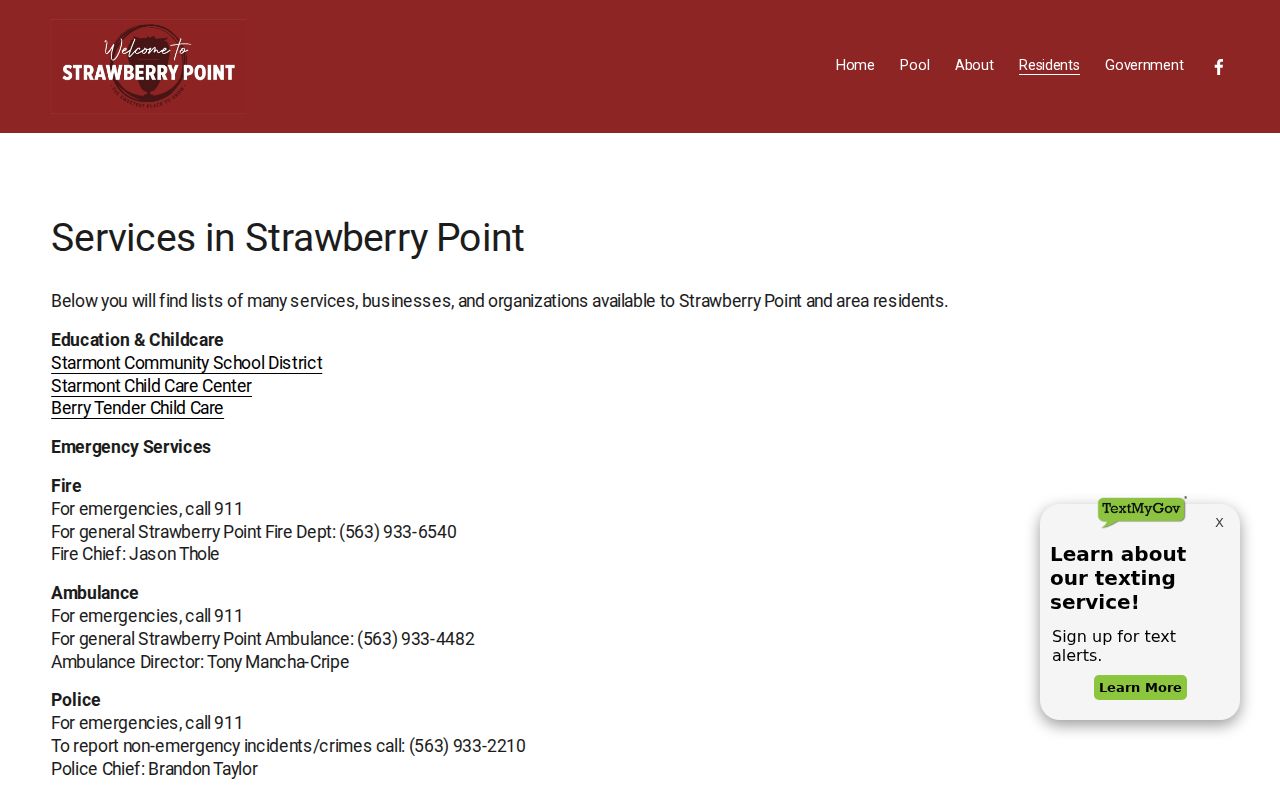
That page routes calls to a local agency. It is not a Clayton County warrant lookup. The city posts no warrant unit, surrender appointment, bond page, recall form, or municipal criminal court. For logistics, the city home page lists City Hall's administrative address and schedule, including the Wednesday lobby closure.

Those are City Hall hours, not court, bond, or warrant-counter hours. Don't let a Wednesday closure stall an urgent Clayton County court question; call the District Court clerk or the right law-enforcement office before you go.
Inside a Municipal Court Warrant
Here the useful public information is a District Court docket or a releasable warrant record tied to a city-originated matter in Clayton County. Fields vary by case. Read the identity and status details together. Then confirm later events with the responsible office.
| Case or citation number | The complete identifier; SMCR012345 is fictional and not a city format. |
|---|---|
| Underlying allegation | The stated traffic, ordinance, misdemeanor, or other basis, not proof of guilt. |
| Issuing court | Iowa District Court in the filing county and judicial role when shown. |
| Appearance or FTA event | The scheduled date and any recorded failure-to-appear action. |
| Bail or conditions | Terms if set and public; no universal city bond schedule was located. |
| Status | Issue, service, return, recall, hearing, or disposition events. |
Clayton County has no municipal cause-number pattern of its own. An old entry alone never proves a warrant is still active; check for a later return, recall, or disposition.
City Parking Is Not a Criminal Warrant Docket
City clerks still handle administrative parking. They just do not keep the District Court criminal docket in Clayton County. The Iowa Judicial Branch payment page excludes city parking violations and sends those questions to city administration. A traffic or ordinance citation filed in District Court is different: it belongs with Iowa Courts Online and the filing-county clerk.
| Question | First contact | Reason |
|---|---|---|
| City parking ticket | City clerk | Excluded from state payment search |
| District Court citation | Clerk of District Court | Judicial docket and court payment |
| Police report | Issuing police custodian | Agency-held incident record |
| Warrant execution | Police or sheriff | Operational service record |
Paying an eligible court citation online is treated as a guilty plea. That is the state's description, not a neutral warrant-removal button. Payment alone does not prove a recall. Check the appearance-required box and confirm the court status.
Resolving a Municipal Court Warrant
A failure-to-appear case in Clayton County belongs to the court that holds the file. There is no Clayton municipal court to call. The path runs through that court. It may take an appearance, a judicial order, a motion filed by counsel, a bond or release step, or payment where the law allows. No single action clears every warrant automatically.
- Confirm the filing county, case number, and current warrant or FTA event with the clerk.
- Ask what official procedure returns the matter to court and whether counsel should file a motion.
- Use sheriff dispatch or the issuing police agency only for current enforcement and appearance routing.
- After acting, confirm that the docket reflects any recall, return, new hearing, and remaining obligation.
Warning: do not assume payment, a blank website result, or a City Hall visit recalled a warrant; verify the court’s current order.
No Clayton County city posts a general warrant amnesty, a walk-in recall counter, or a universal bond amount. Guaranteed same-day hearings do not exist here either.
City Lists Do Not Replace Court Confirmation
None of the five major Clayton County cities offers a public warrant portal. The Mar-Mac Police most-wanted page is that exception.
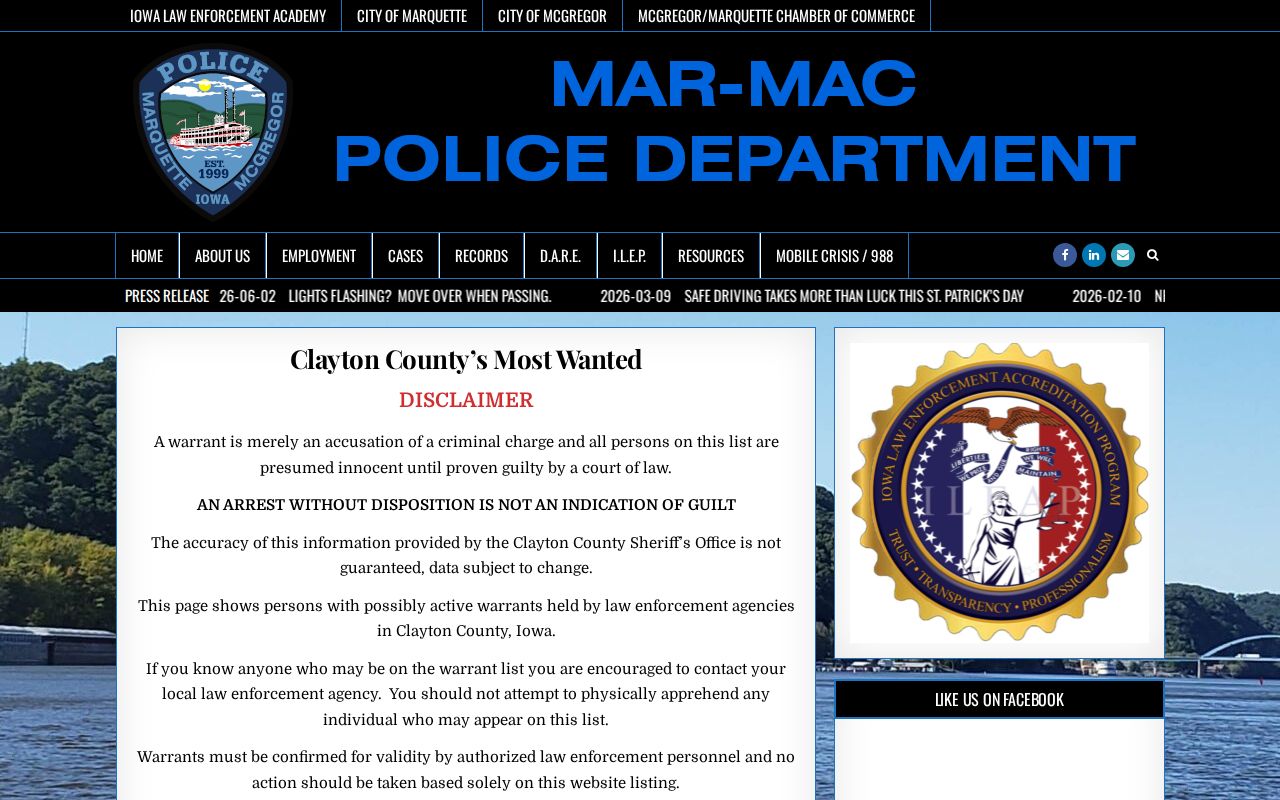
A most-wanted page in Clayton County only scratches the surface. It is a hand-picked subset, not a full warrant index or a substitute for the municipal court docket. A missing name proves nothing either way. Only the issuing court can confirm whether a warrant exists. Federal matters sit outside that system entirely. The Northern District of Iowa court warns about callers or texts demanding money or claiming to notify someone of a federal warrant.
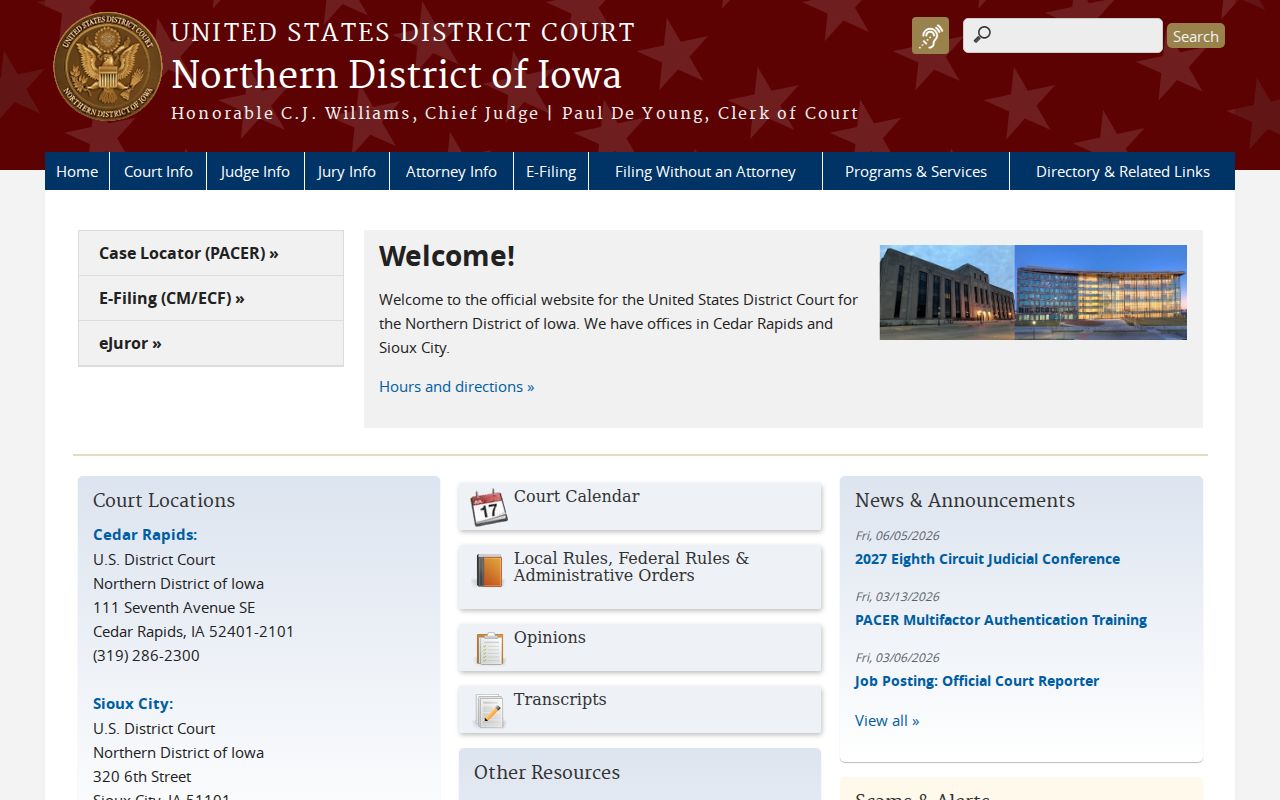
A curated most-wanted list for Clayton County covers only a subset of cases. It is not a warrant index. It is not a municipal court docket either. A name left off does not mean that person has no active warrant. Federal court is a separate boundary again. The Northern District of Iowa warns about callers or texts demanding money or claiming to notify someone of a federal warrant.