
Clayton County Arrest Warrants Explained
In Clayton County, judges issue warrants, not the sheriff. Under Iowa Code chapter 804, a magistrate signs an arrest warrant after reviewing a complaint or sworn affidavit. The paperwork must show probable cause that a public offense occurred and that the named person committed it. Probable cause means facts backing the belief. When the law allows it, the judicial officer can issue a citation instead. Either way, an arrest warrant is a court order, not an entry on a sheriff-created list. Clayton County sits inside Iowa's unified District Court. Judicial magistrates, district associate judges, and district judges share the trial work. The Clayton County court directory lists the local court offices, and the Clerk of District Court maintains the criminal docket.
Clayton Warrants Need Probable Cause
A complaint lays out the alleged offense. An affidavit is a sworn statement that can back it up. In Clayton County, a magistrate weighs that material and decides whether probable cause exists. That step separates investigation from judicial power to arrest. A public docket may list a warrant event while holding back the affidavit, since release could affect an open investigation.
- Complaint
- A formal allegation presented to the court.
- Probable cause
- A reasonable factual basis, not a finding of guilt.
- Return
- The record of action taken under a warrant.
- Recall
- A court action withdrawing the warrant.
For filed docket events, ask the Clayton County clerk; for execution routing, ask the sheriff or the issuing police agency.
Inside a Clayton County Arrest Warrant
Iowa Code section 804.2 spells out the contents. It directs a peace officer. It also identifies the person if known, names or generally describes the offense, and shows the date and place of issue with the magistrate's signature and title. Section 804.3 adds a bail endorsement when the offense is bailable. Clayton County posts no bond schedule for these warrants. Never infer a bond amount from another case.
| Issuing court | Iowa District Court, Clayton County |
|---|---|
| Case reference | A case ID, such as fictional FECR-000000 |
| Warrant detail | Type, alleged offense, issue date, judicial title, and bail field |
| Later events | Service, return, recall, disposition, and next setting when public |
Samples omit real names, birth dates, addresses, and photos. Only the issuing Clayton County court or agency can confirm actual warrant status.
No Clayton Arrest Warrant Roster
The Clayton County Sheriff posts no public warrant roster. The office site offers no warrant-unit search, surrender form, or live status button. That gap doesn't mean the sheriff holds no warrants. A warrant check simply runs through several official channels. The Iowa Courts Online public docket is the best electronic starting point for public case events. Two cautions apply. That portal is not the law-enforcement IOWA System, and it is not a clearance. Search the right county and name. Then confirm with the clerk and agency, since a blank result may reflect timing, confidentiality, a different county, or a nonsearchable entry.
Key Point: No public result does not prove that no Clayton County arrest warrant exists.
Serving Arrest Warrants in Clayton County
The Clayton County Sheriff executes and returns warrants, writs, summonses, and other court process. Iowa law allows delivery to any peace officer. Service can occur in any Iowa county. Only a peace officer may arrest under it. The clerk keeps the court record but does no field service.
| Role | Task | Best question |
|---|---|---|
| Judge or magistrate | Issues judicial process | What does the filed order require? |
| District clerk | Keeps case and docket | What issue, return, or recall event is public? |
| Sheriff or police | Serves process | Who confirms current execution status? |
This split explains why court and agency records may update at different times.
Clayton Sheriff and Clerk Channels
Case, citation, hearing, copy, and docket questions go to the Clayton County Clerk of District Court at 563-245-2204. That office sits at 111 High Street NE, Suite 203, Elkader. Published weekday hours run 8:00 a.m. to 4:00 p.m. For law-enforcement routing, call the sheriff at 563-245-2422. Option 1 reaches dispatch; option 2 reaches administration.
- Search your own name and Clayton County in Iowa Courts Online.
- Record the case ID and exact warrant-related wording.
- Ask the clerk whether an issue, service, return, or recall event is public.
- Ask sheriff dispatch or issuing police to confirm the right status route.
- Direct a narrow copy request to the custodian holding that record.
The Clayton County crime-tip form serves a separate public-safety role, not personal warrant-status requests.
Comparing Clayton County Warrant Process
Arrest warrants, summonses, and failure-to-appear warrants differ. Each reaches the Clayton County court its own way. Iowa commonly calls the missed-citation process an arrest warrant for failure to appear. "Capias" is not the standard term in official Clayton County and Iowa sources, so follow the docket's actual words.
| Process | Trigger | Effect |
|---|---|---|
| Arrest warrant | Probable cause on complaint or affidavit | Directs peace-officer arrest |
| Summons or citation | Direction to appear later | Allows response without immediate warrant arrest |
| FTA arrest warrant | Willful failure to appear on citation | Returns missed matter to court after enforcement |
A search warrant works differently in Clayton County practice. It authorizes a search of identified persons, places, or things, not an arrest.
Clayton Arrest Records by Request
Iowa's Open Records Law, Iowa Code chapter 22, covers Clayton County agency records within lawful limits. The county's open-records policy accepts requests in person, by phone, in writing, or electronically. No identity or reason is required. A precise description still speeds the search. Court records follow Judicial Branch access rules through the clerk instead. Ask for a releasable issue, service, return, or recall record tied to a known case number and date range. Say whether you want inspection or a copy. Some material may be withheld or redacted for an investigation, juvenile confidentiality, or another rule. When only part is confidential, request the public part and the legal basis for each redaction. The county request form shows the agency-record route.
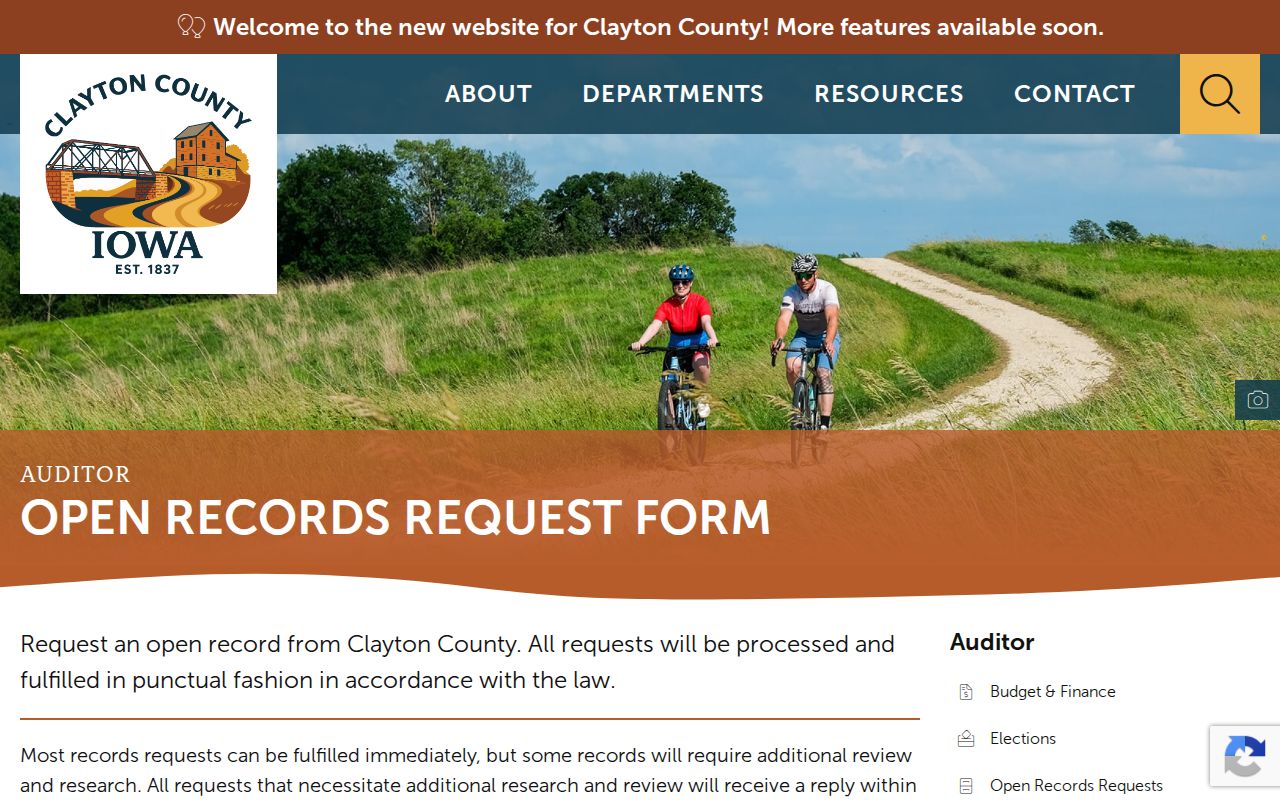
The form supports a narrow request but does not replace current warrant confirmation.
After a Clayton County Arrest
Under Iowa Code section 804.21, an arrest made on a warrant goes before a magistrate without unnecessary delay. What happens next depends on the case. Bail, release, and hearing dates are set by the court, not by a fixed schedule. No official source gives a flat bond amount or a guaranteed release time for every Clayton County arrest. Each warrant and each case carries its own terms. Iowa Courts' courthouse history records Elkader's place as the county seat.
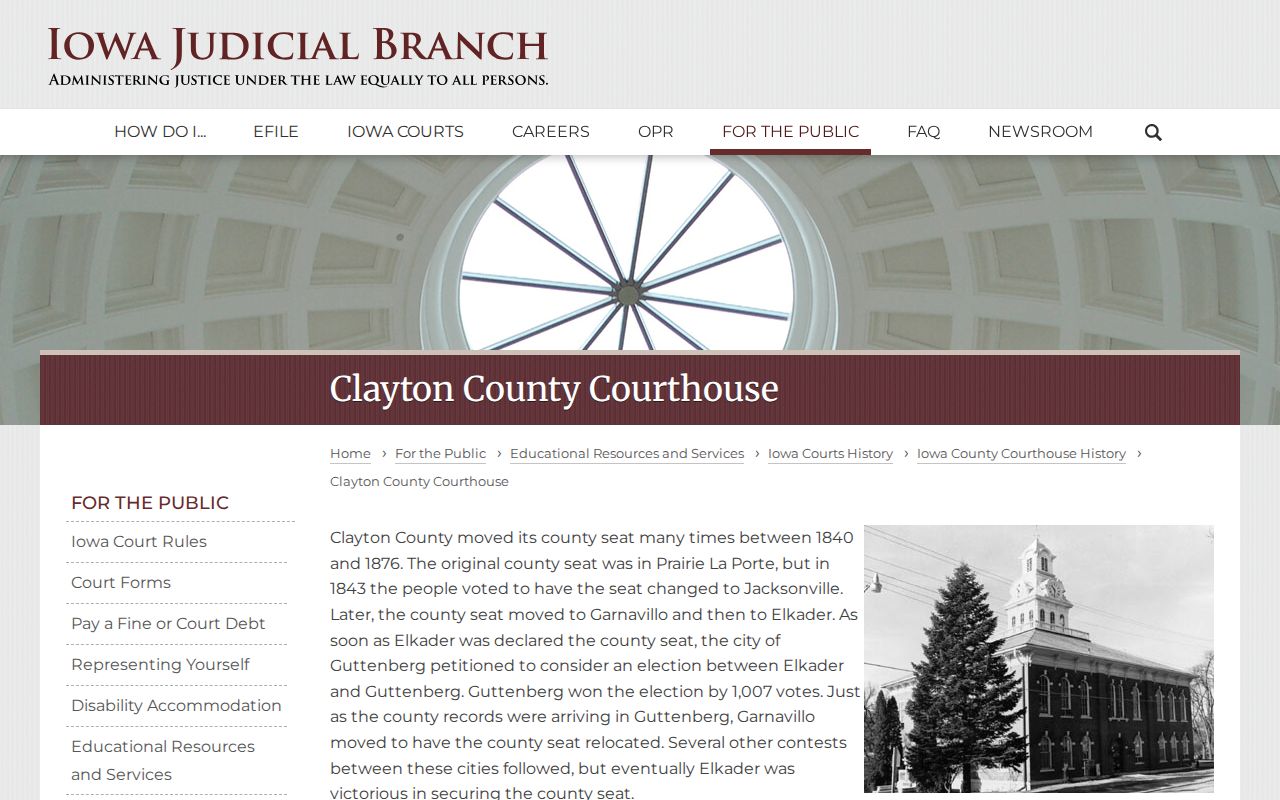
Even when another Iowa officer serves the warrant, the return lands on the Clayton County docket.
If a Clayton Arrest Warrant Names You
If a Clayton County warrant lists your name, act on it rather than hoping it fades. Write down the case number. Confirm which court issued the warrant, then talk with an attorney about the safest way to respond. Your lawyer can verify the active warrant, ask about bond or release terms, and arrange a voluntary appearance or surrender. The clerk can explain procedure but cannot offer legal advice. After an arrest, a court order, or a recall, ask exactly what was entered and what the public docket now shows. Paying a fee alone does not confirm the warrant was recalled, and a stale online entry does not mean it is still active. Current status comes only from the issuing court in Clayton County.
Important: Confirm through counsel, the court, or law enforcement before acting, and never confront another person named in a record.
Clayton City Agencies and Warrants
In Clayton County, the pieces split cleanly. A city police department may investigate or issue a citation, the unified District Court makes the judicial decision, and a peace officer serves the process. The clerk keeps the case file. Postville sits in both Clayton and Allamakee counties, so confirm the filing county first. The county home routes you to the right office.
City name alone will not identify the court route; the case ID does that. Postville's official site shows why county confirmation matters.

Local police may route the question, while the filing-county clerk owns the court docket.