
Checking for a Warrant in Clayton County
The free Iowa Courts Online public docket is the place to begin. Pick Clayton County. Then search your own name and case type, or plug in a case or citation number you already have. The name path demands at least two characters in both the first and last name boxes. Common names get easier to pin down when you add more characters. A full identifier makes the case-number route the sharper tool. Whatever comes back, read it as a lead rather than a verdict. Scan the entries for failure to appear, warrant issued, service, return, recall, bond, hearing, or disposition. A blank screen can mean lag, a different county, confidentiality, juvenile status, or data sitting in a law-enforcement system outside the public index.
- Collect the legal name, filing county, case type, and any complete case or citation number.
- Search Iowa Courts Online and read the full chronology.
- Call the Clayton Clerk of District Court at 563-245-2204 about the filed case.
- Call Clayton Sheriff dispatch or administration at 563-245-2422 for enforcement routing.
- Speak with an Iowa attorney before appearing if arrest is possible.
Clayton County Court Search Fields
The portal gives you two ways in. "By Name" lets you choose Clayton County, type a first and last name, and narrow with a case type if that helps. There is also a partial citation option. It takes the last four to six digits. "By Case or Citation Number" wants Clayton County plus the complete Case ID or Citation Number. That second route wins on precision. Spelling slips and common names cannot throw it off.
| Search field | Best use | Check closely |
|---|---|---|
| First and last name | Finding a possible personal case | Spelling, county, case type, and dates |
| Complete Case ID | Opening a known court file | Every letter and digit |
| Complete citation number | Checking a known ticket | Filing county and posting time |
| Last four to six citation digits | Narrow partial citation search | Compare the returned details |
That shopping cart belongs to the payment workflow. Paying online does not itself recall a Clayton County warrant, and the cart proves nothing about the court's action.
Clayton County Warrant Types
Iowa's vocabulary separates the judicial acts. An arrest warrant orders a peace officer to arrest a named or described person. A warrant for failure to appear can follow when someone willfully skips court as a citation directed. A search warrant permits a search, not an arrest. People say "bench warrant" all the time. The exact label on the Clayton County docket is what counts.
| Warrant type | How it arises | Public route |
|---|---|---|
| Arrest warrant | A judicial officer finds lawful grounds under Iowa procedure | District Court clerk and serving agency |
| Failure-to-appear warrant | A required court appearance is willfully missed | Docket, clerk, then agency confirmation |
| Search warrant | Probable cause supports a search | Access may be delayed or restricted |
| Juvenile process | A Juvenile Court matter requires court action | Confidentiality-aware court route |
Current Iowa and Clayton sources stick to "arrest warrant" and "warrant for failure to appear." Neither capias nor capias pro fine is the standard local wording.
No Clayton County Warrant List Found
Clayton County publishes no countywide active-warrant database. The sheriff's landing, About, Forms, Civil, payment, crime-tip, contact, and District Court pages carry none. There is no warrant-unit page, no surrender form, no public status form, no downloadable roster, and no county most-wanted list. Treat that gap as a signal. Go straight to official channels rather than a random name list.
Search limit: No visible result means only that the public interface showed no match at that time. It does not certify that no warrant exists.
The fallback is personal and local. Ask the Clerk of District Court about the judicial file. Ask the sheriff how enforcement runs. Contact the issuing city police agency if you know its role. A narrow Chapter 22 request works when you need a specific releasable record.
Inside a Clayton County Warrant Record
Iowa Code section 804.2 sets the core schema. Every arrest warrant is directed to a peace officer, names or describes the person, states the offense, gives the date and the county or city, and carries the magistrate's signature and title. Section 804.3 adds bail or release terms when the warrant is bailable. A clerk docket can pile on more. Look for case, party, filing, hearing, payment, failure-to-appear, service, return, recall, and disposition events.
| Case or warrant number | The identifier used to locate the file, illustrated only by FECR012345. |
|---|---|
| Person named | The name or description on the process, which needs identity confirmation. |
| Offense | The charge or general offense description, not proof of guilt. |
| Issuing authority | The Iowa judicial officer and county tied to issuance. |
| Issue date | The date of the judicial command, distinct from service or return. |
| Status events | Issued, served, returned, recalled, quashed, hearing, or disposition as available. |
A Clayton County docket is not a live clearance certificate. Confirm the newest event with the court and the serving agency.
Clayton County Clerk Starts Court Checks
The Clayton County Clerk of District Court holds criminal, traffic, civil, probate, juvenile, small-claims, adoption, grand-jury, and related court records. The office sits at 111 High St. NE, Suite 203, Elkader, IA 52043, and the published phone is 563-245-2204. Call and ask about a filed case, a current hearing, a visible warrant event, a return, a recall, a payment path, or a public copy. For the court's own picture, the Judicial Branch Clayton County page names the court and the clerk route for District Court business.
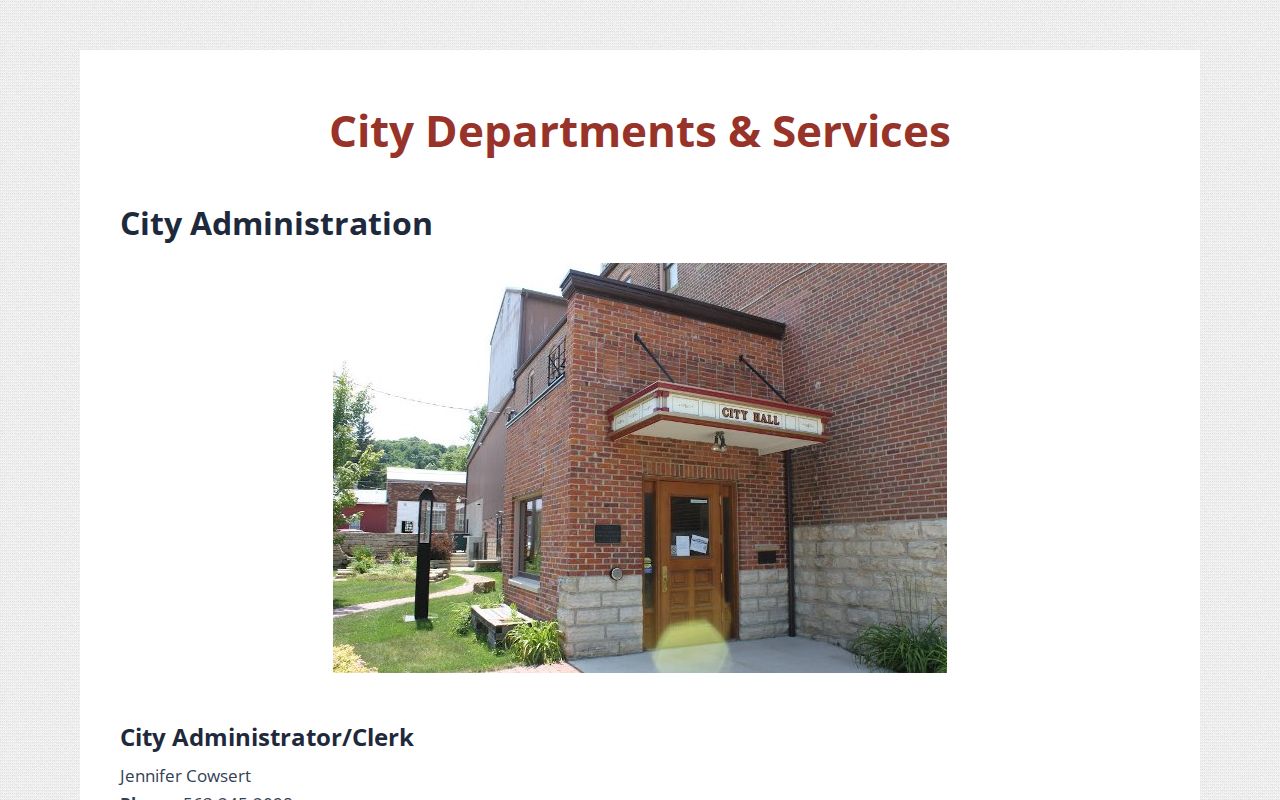
Elkader is the county seat. Still, the city hall and police counter are separate from the courthouse clerk, so call the right Clayton County record holder before you drive over.
Issuing and Serving Warrants in Clayton County
Iowa District Court in Clayton County, Judicial District 1 is the unified local trial court. Judicial magistrates take simple misdemeanors, scheduled violations, traffic and ordinance matters, county or municipal infractions, preliminary hearings, warrant proceedings, arrests, and bail. District associate judges and district judges carry broader assigned criminal jurisdiction. No modern Clayton municipal criminal court exists here. The court issues the process. The sheriff, city police, and other authorized peace officers then execute it. Clayton Sheriff's own About material confirms the office executes and returns warrants and other legal process. Those enforcement records stay separate from the clerk's judicial docket.
Clayton Clerk of District Court
111 High St. NE, Suite 203
Elkader, IA 52043
563-245-2204
Filed court case and docket routing.
Clayton County Sheriff
22680 230th St.
St. Olaf, IA 52072
563-245-2422
Dispatch option 1 and administration option 2.
Clayton County Sheriff Call Routing
Clayton County posts one sheriff number: 563-245-2422. Press 1 for dispatch. Press 2 for the administrative office. The Saint Olaf office and jail open weekdays from 8:00 a.m. to 4:00 p.m. No warrant-unit extension appears on the site, and neither does an after-hours surrender schedule, a public warrant counter, or a bond window. Still, the phone is the best first step. Dispatch or administration can explain which office confirms a Clayton County warrant right now and what steps apply before you appear in person. A dispatcher may route the call. The website does not promise that an officer will read a full court warrant over the phone, so the clerk of the issuing court stays the record contact. The Sheriff Make a Payment page covers jail room-and-board and civil payments, names no criminal-warrant bond portal, and no civil payment vendor is a route to resolving a warrant.
If You Have a Warrant in Clayton County
Write down the exact case ID, citation number, court, filing county, event date, and docket wording. Then call the Clayton County Clerk of District Court. Ask whether the record shows a hearing, warrant issue, return, recall, or other order. The sheriff handles present enforcement. Call for instructions on appearing. If a city agency started the case, its non-emergency line can point you to that agency's route.
Act with care: Consult an Iowa attorney before appearing when arrest is possible. Counsel can ask whether a new setting, motion, bond, compliance step, or arranged appearance may be available.
Do not assume payment closes anything. The Iowa Pay a Fine page says online payment counts as a guilty plea and directs you to appear when the citation marks court appearance required. Paying can settle the debt without recalling an arrest warrant. Save receipts, orders, bond papers, and new-setting notices. Then confirm each official Clayton County record reflects the change.
Clayton County Citation Posting Delays
A fresh ticket rarely shows up right away. Iowa Judicial Branch materials say citations can take 10 to 14 days to reach the public process, and the payment-search notice gives a 14 to 21 day range in context. Weekends, holidays, and filing workload all affect timing. Those ranges cover posting only. They are not a grace period, and no range guarantees that warrant action cannot occur. If your citation is still missing after the published period, call the Clayton County clerk. Give the full citation number. Confirm the filing county too. Postville sits in both Clayton and Allamakee counties, so a Postville address does not prove that Clayton County is the filing county. A traffic case from another county stays there even when you live in Clayton County. Before paying, read the appearance-required box and court instructions, and ask whether a hearing or warrant event remains open. No shopping-cart entry can answer that.
Clayton County Warrant Records and Public Access
The Iowa Open Records Law, Iowa Code Chapter 22 lets the public inspect and copy existing records unless a statute or lawful restriction applies. Clayton County accepts requests in person, by phone, in writing, or electronically. No ID or reason is required. Even so, name what you want. A useful request names the custodian, the date range, the case or citation number, and the existing record sought.
Access rules:
Section 22.2 states the general right to examine and copy public records, subject to lawful exceptions.
Section 22.7 protects listed confidential records and permits required withholding or redaction.
Iowa Code chapter 232 places special limits on juvenile records.
Paper copies cost $1 per single-sided page, and staff time runs $50 per hour for compiling, retrieving, copying, or supervising a request, plus allowed media and mailing costs. Prepayment may be required when an estimate exceeds $50. Clayton County lists no separate electronic warrant-search fee.
Clayton County Chapter 22 Requests
The Clayton County open-records process works best when a request names the right holder. Ask the clerk first. Court-created docket entries, filed complaints or citations, orders, hearings, and public court copies all sit with the clerk of court. Ask the sheriff for service, execution, or return details. Limits can apply there. A city police custodian handles only the records that agency itself keeps.
The county's own open-records page spells out the local request route. Most requests are handled promptly where possible. A confidentiality decision may take up to 20 calendar days. A substantial research delay should generally be communicated within 10 business days. Those deadlines govern records review only; they say nothing about warrant status. When your own matter needs resolving now, direct contact with the Clayton County court and sheriff beats waiting on a records request.
Clayton County Warrants by City
Clayton County counts 18 communities under a distributed public-safety model. City police can route questions about locally issued citations or incidents. The unified Iowa District Court keeps every criminal and traffic docket, however, so the real court file lives in one place. None of the five profiled cities maintains a separate public municipal criminal court or city warrant portal.
Postville
Crosses Clayton and Allamakee counties, making filing-county selection essential.
Guttenberg
City police work with Clayton County Communications and the county court route.
Elkader
The county-seat city has separate city, police, and courthouse counters.
Strawberry Point
Local police route incidents while the Clayton clerk holds court records.
Start with the city agency only to pin down the citation or incident. Then confirm the judicial file with the Clayton County clerk.
Clayton County and the IOWA System
The IOWA System is a criminal-justice network. Iowa On-line Warrants & Articles is the full name. The Iowa Department of Public Safety description says it links more than 450 police departments, sheriff's offices, and state or federal justice agencies, with connections to NCIC and other systems. Clayton County law enforcement works through this same statewide network.
The state's own description confirms the system's purpose for agencies. It creates no public statewide self-search. For public case information, residents use Iowa Courts Online. The Clayton County clerk holds the court record, and the sheriff routes local enforcement questions. No private search box reaches the operational IOWA System just because it borrows statewide language, so keep public and restricted channels separate.
Clayton County Warrants Are Not Convictions
A Clayton County warrant records a court's command or a case event, nothing more. Later orders can recall it or replace it. A charge behind it may be dismissed or amended as the case moves. The Mar-Mac most-wanted page carries the right caution: details can be wrong or already resolved, and no member of the public should try an apprehension.
- Issued
- The judicial officer signed or ordered the warrant.
- Served
- A peace officer executed the arrest process.
- Returned
- An officer reported action on the process to the court.
- Recalled or quashed
- The court withdrew or ended the warrant through a case-specific order.
- Active or outstanding
- Common language for a warrant believed enforceable, requiring official confirmation.
Read every term in a Clayton County warrant entry in order. An old issue line without the later entries can misstate where things now stand.
Clayton County Warrant Scam Checks
Warrant scams in Clayton County run on fear and haste. The caller poses as a court employee or an officer. Then comes the threat of immediate arrest and a demand for gift cards, cryptocurrency, or money orders. A badge number or official-looking paper proves nothing. Caller ID proves nothing either. Hang up and dial a number pulled from an official government page. The federal Northern District of Iowa warns that it will not call or text anyone to demand money or announce a warrant. A federal matter runs through the federal court and PACER, not Iowa Courts Online. For a local claim, call the Clayton County clerk or sheriff on their published numbers. Ask about the case route and the lawful next step. A real debt can exist, yet payment alone does not prove a warrant has been recalled.